
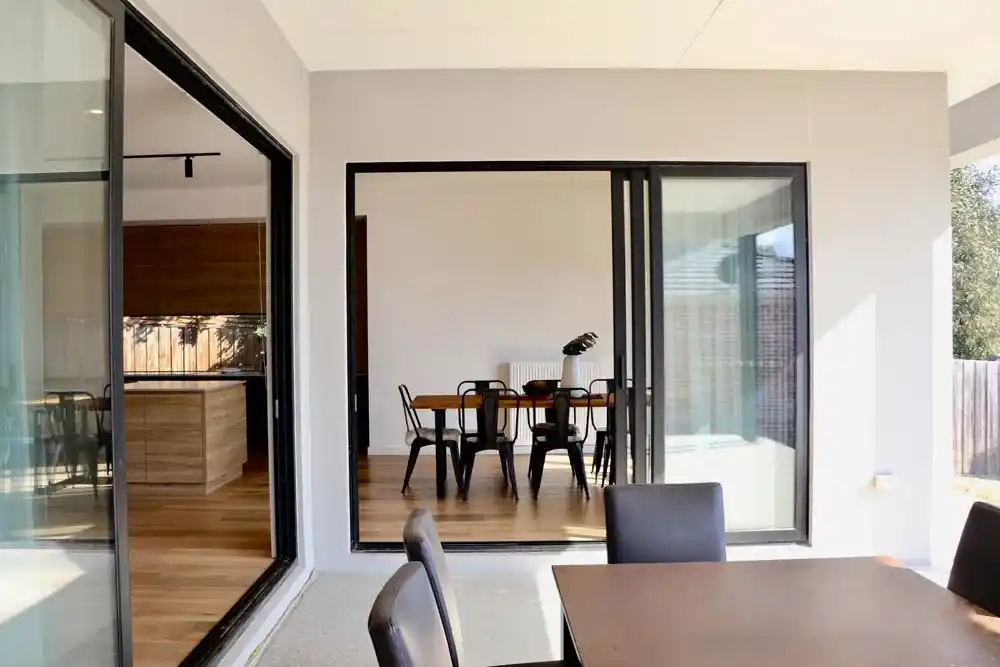
Description
Description
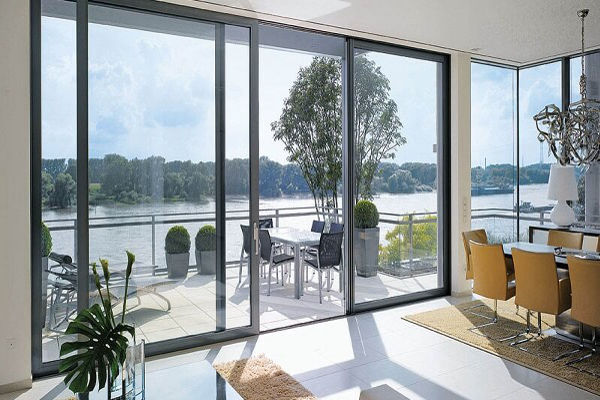
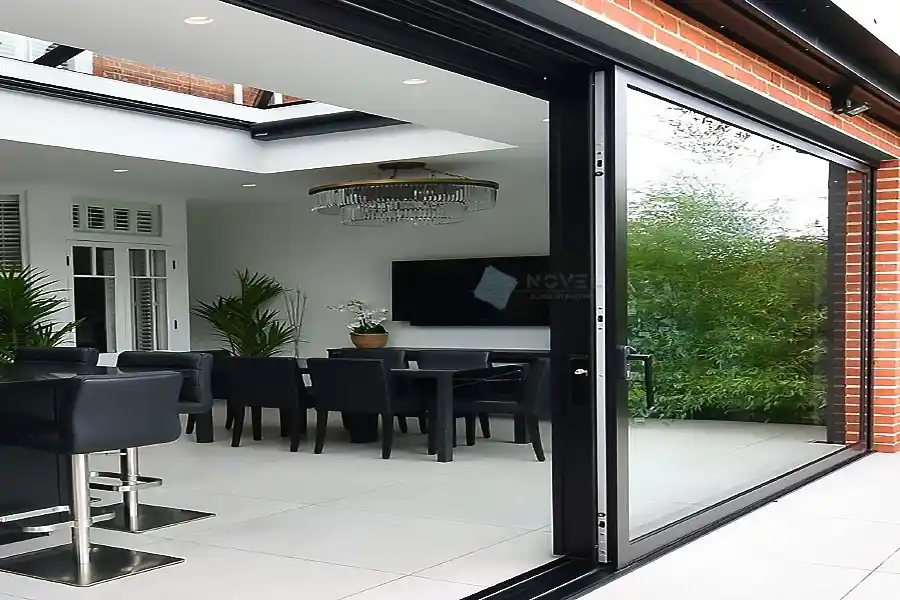
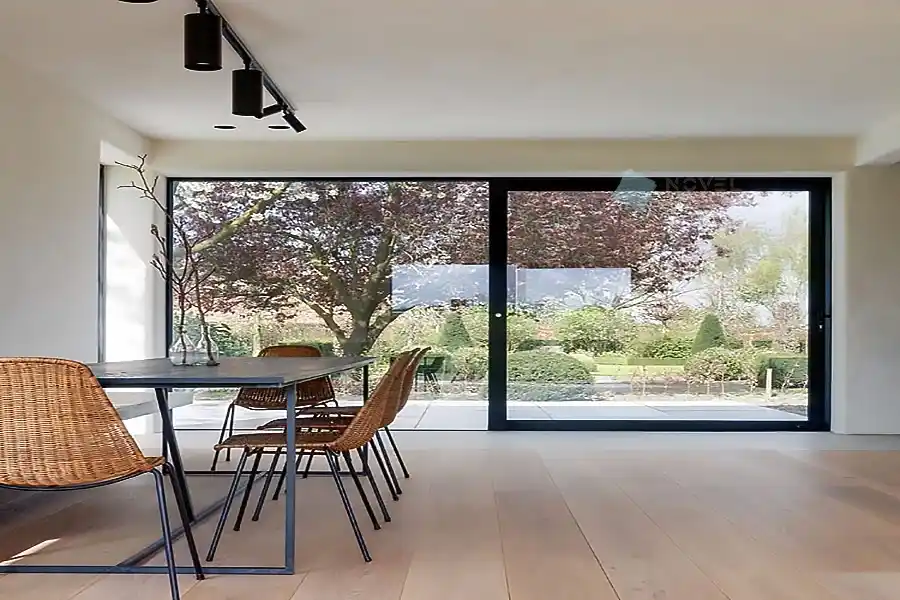
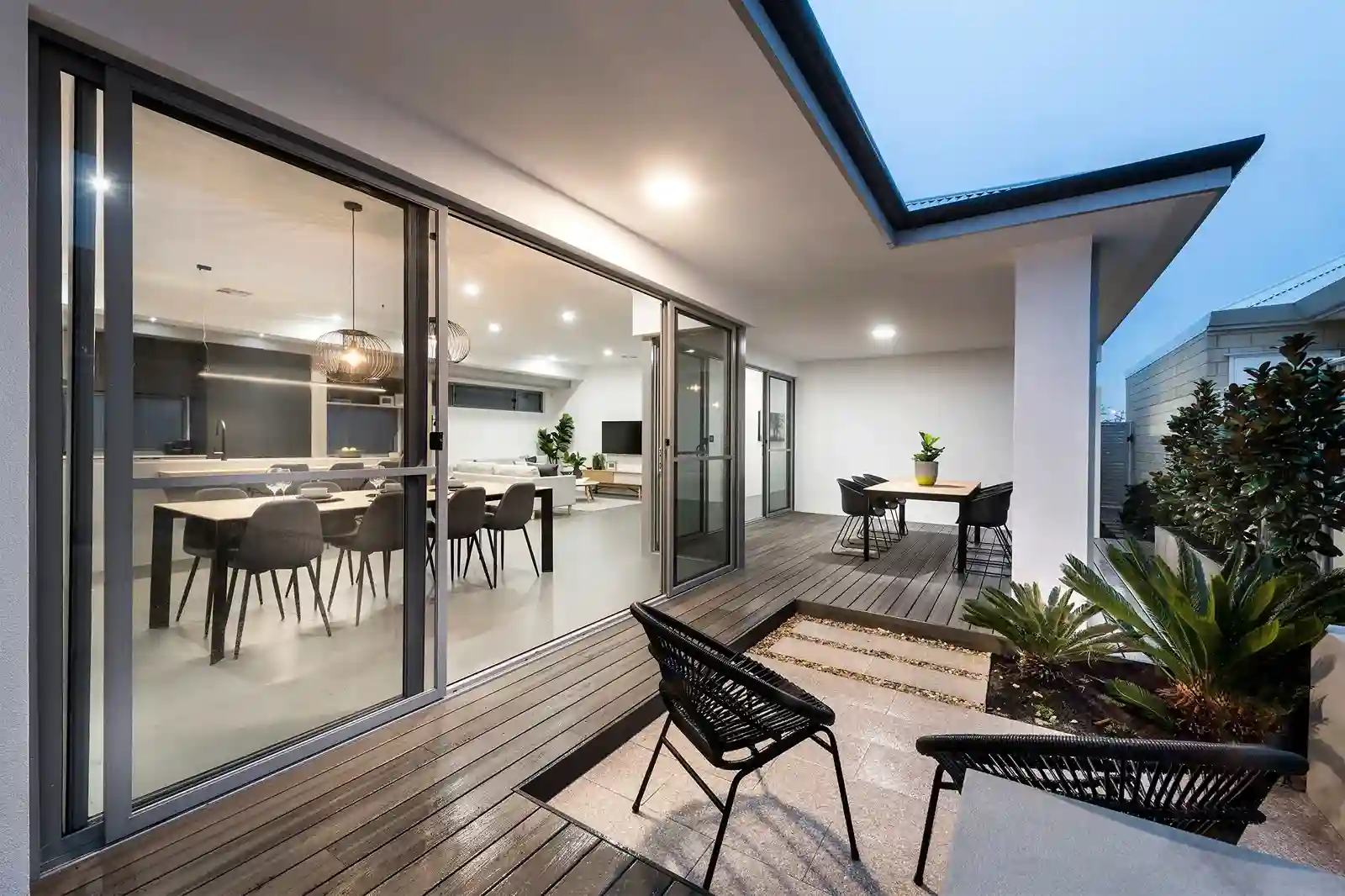
Aluminum frames are not inherently insulated against cold and heat. However, when a polyamide insulating strip is installed between the profiles, it creates a protective layer between the outer and inner surfaces. This process makes the aluminum profile insulated, and these types of profiles are called thermal break profiles. For this reason, thermal break windows were designed and manufactured to overcome the disadvantages of aluminum windows.
Thermal break frames are an effective solution for reducing and controlling heat and preventing energy loss. This type of frame is considered a good insulating option among aluminum windows. Using these types of windows can significantly reduce energy consumption in commercial and residential buildings.
The most important factor in manufacturing thermal break windows is using polyamide to insulate the window rather than other materials such as PVC, because these types of materials reduce the strength of the window. The presence of a polyamide strip between the inner and outer frames of thermal break windows prevents heat, cold, sound, and vibration from entering the building.
Polyamide strips in the aluminum profiles of double-glazed windows cause the heat transfer coefficient of aluminum to decrease from 203 to less than 4. The polyamide strip also interrupts the conductivity of the aluminum frame.
The best way to identify genuine polyamide strips in thermal break windows is to expose part of the strips to a direct flame. If the strip catches fire and produces a nylon-like smell, the strip is made of PVC. Otherwise, the strip is made of high-quality polyamide.
Advantages of Using Double-Glazed Thermal Break Windows
Thermal break frames contain an intermediate layer that increases the safety of the building interior. These types of windows are more resistant to heat transfer and ignition compared to other frames.
Double-glazed thermal break windows have high durability and experience less wear and corrosion, resulting in lower repair and maintenance costs. Using thermal break frames reduces 38% of energy loss in winter, 32% of energy loss in summer, 28% of fuel consumption, and 20% of the initial investment in building facilities.
The quality and construction method of thermal break windows have made these windows more widely used in earthquake-prone areas. Thermal break windows are flexible, and this flexibility can be clearly seen in both the interior and exterior sections of the window.
Another advantage of thermal break windows is that the interior and exterior sections can be manufactured in different colors, allowing them to be produced in various colors according to the project requirements.
If you are unsure whether to choose UPVC windows or thermal break aluminum windows for your residential or commercial building in order to reduce energy consumption, thermal break windows are certainly better than other types when it comes to different weather conditions and reducing energy consumption.
Comparison Between Thermal Break Windows and UPVC
In Terms of Insulation:
UPVC windows and thermal break aluminum windows have similar insulation performance, but they have some differences. When the dimensions of your window allow you to use either UPVC or aluminum, the best option should be selected. Both UPVC and thermal break aluminum profiles are insulated against heat and cold. Aluminum frames are not insulated on their own, but when an insulating polyamide strip is placed between the profile layers, the connection between the surfaces is interrupted and the aluminum profile becomes insulated. This system is called a thermal break. Therefore, we can conclude that both frames provide insulation against heat and cold.
In Terms of Overall Cost:
In terms of price, standard UPVC Vistabest windows are less expensive than thermal break windows. A standard thermal break window made with Iranian aluminum costs approximately 2.5 times as much as a UPVC Vistabest window.
In Terms of Moment of Inertia and Window Strength:
The strength of a UPVC window depends on its internal galvanized reinforcement. According to the standard, in Vistabest frames, if an internal galvanized profile measuring 33 × 25 mm with a thickness of 1.5 mm is used, the moment of inertia in both Series 60 and Series 70 is equal to 1.46 cm⁴.
Under the best conditions, in the Vistabest static profile with a box-shaped galvanized reinforcement measuring 54 × 25 mm and a thickness of 2 mm, the moment of inertia reaches 10.79.
However, in aluminum profiles, the moment of inertia is approximately 11 in the weakest condition and can increase to 36 in the best condition. Based on this comparison, it can be concluded that for manufacturing large windows, especially on upper floors where wind pressure is greater, Vistabest static UPVC profiles or thermal break aluminum profiles should be used.
In Terms of Quality and Color Changes Under Different Weather Conditions:
UPVC profiles are white, and the best type of UPVC window is the white version. Different colors and designs are available for UPVC windows, which are created by applying a film layer over the white profile. Currently, various colored UPVC windows are available on the market with good quality.
Aluminum profiles are available in two forms: electrostatic powder coating and anodized finishes. In anodizing, the aluminum profile is placed in a solution, and through a chemical process, a resistant oxide layer is formed on the profile. The created layer increases the resistance of the aluminum.
Various anodized colors can be applied to aluminum windows. Electrostatic powder coatings are carried out at a temperature of 350°C, allowing the paint to adhere well to the profile and create a resistant layer. Anodized coating systems show greater resistance to harsh weather conditions and scratches.
Anodized thermal break windows, compared to decorative and colored UPVC windows, offer greater strength and durability for use in hot and dry regions and have better profile quality and performance. It is recommended to use aluminum windows in hot and desert regions. However, if you want to use UPVC windows, it is better to choose the white version.
In Terms of Opening Types and Hardware:
The hardware used for UPVC windows can also be used
Reviews
There are no reviews yet.