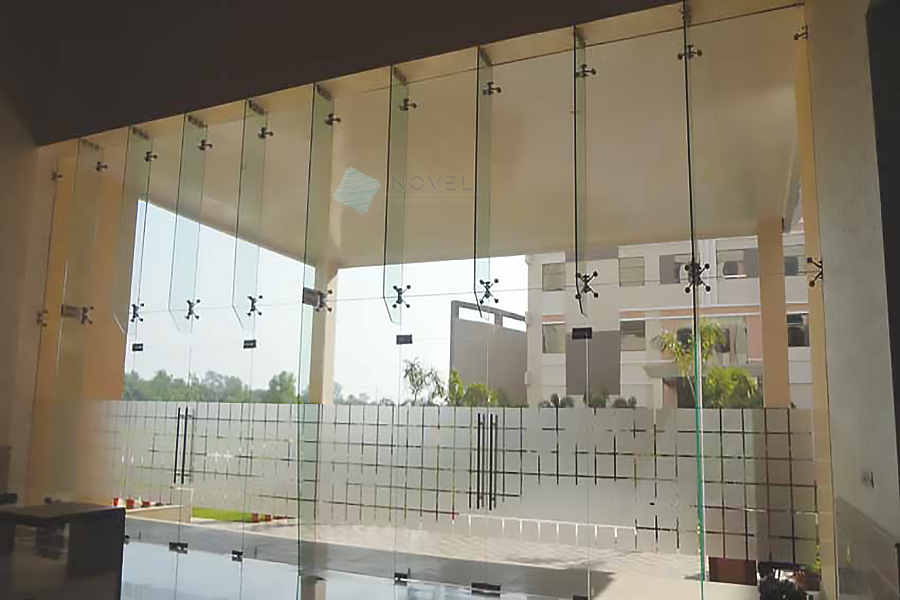
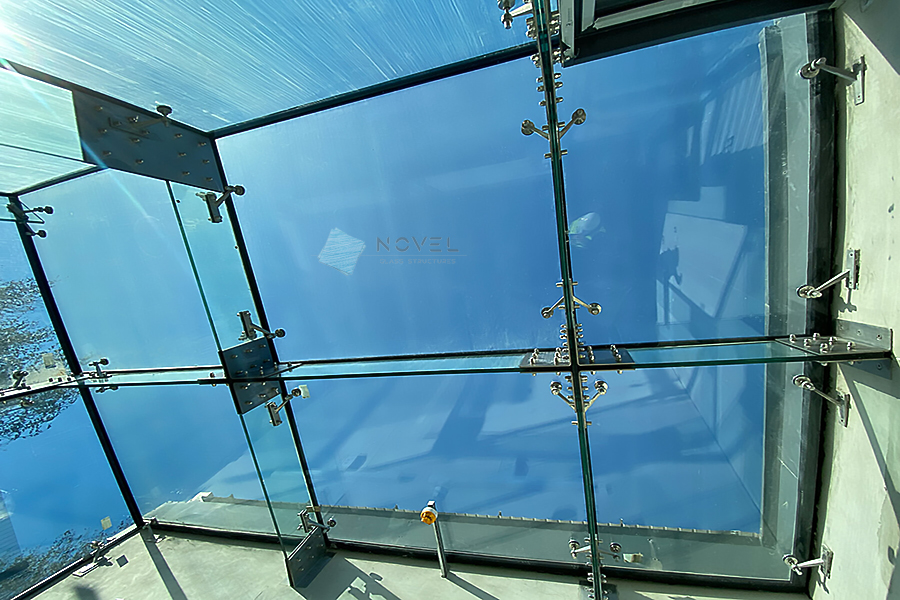
Description
Types of Spider Glass Facades
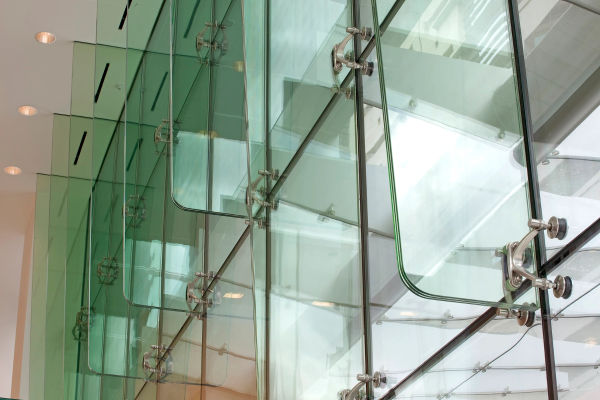
Spider glass facades can be installed using several different methods, each with its own applications and specific requirements. Each type also has its own advantages and disadvantages. Some of the main types of spider glass facades are as follows:
Spider Facade with Pipe or Box-Section Structure
Spider Facade with Glass Fin and Suspended Structure
Cable-Supported Spider Facade
Truss-Supported Spider Facade
And …
Spider Facade with Pipe and Box-Section Frame
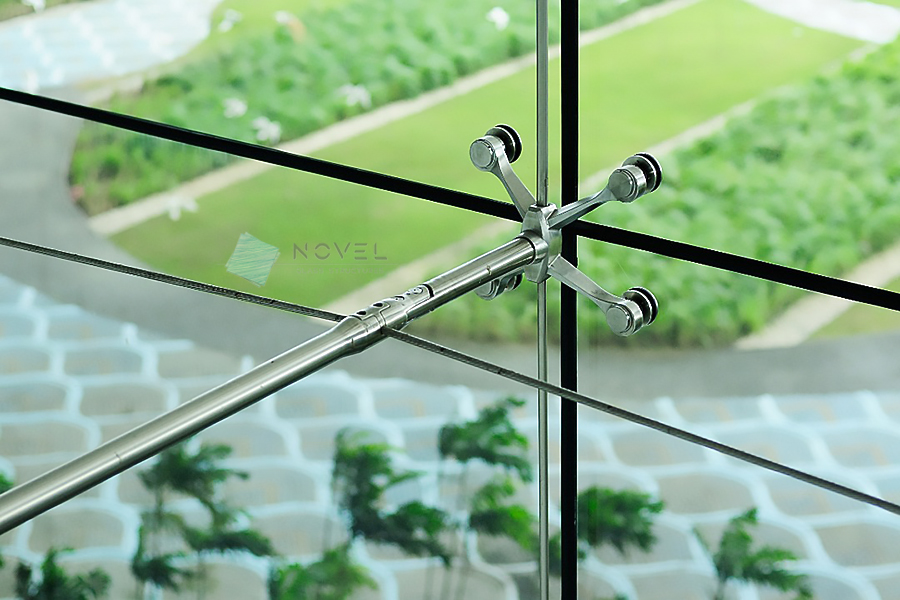
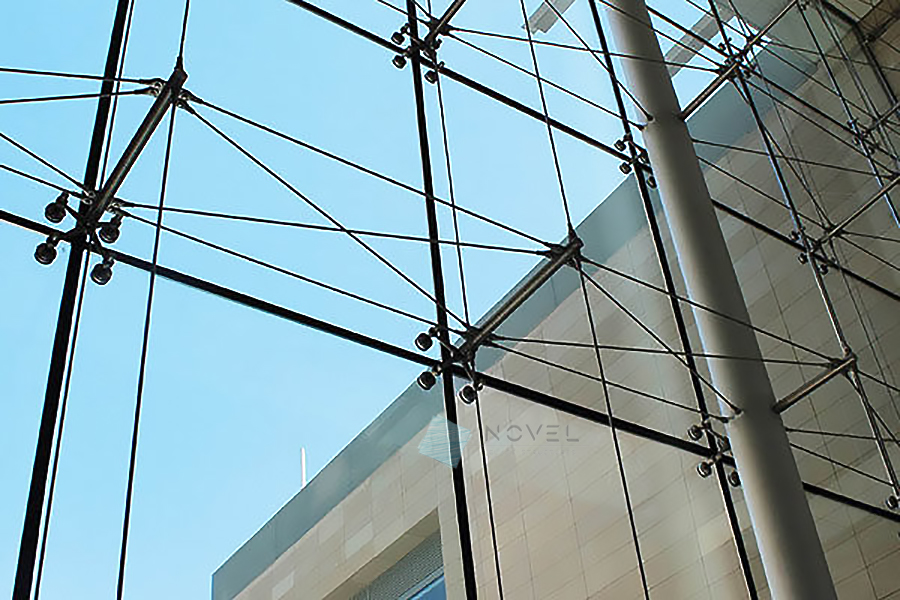
The pipe spider facade is one of the most common types of spider glass facades. In this method, pipes or box sections, which are mostly made of stainless steel, are used as the supporting system for the spider facade.
In the pipe-based installation of a spider facade, the pipes act as supporting elements and transfer applied loads such as impact, wind, earthquakes, and other forces to the structure and ground.
The dimensions of the pipes used in a spider facade are directly related to the following factors:
Glass thickness and weight
Project location
Glass panel modularization
Structural framework
For aesthetic reasons, and because the hardware used in spider facades is made of stainless steel, the pipes are also generally made of stainless steel. Other advantages of this facade include fast installation and lower costs.
A spider facade can be installed across spans of up to 10 meters. This type of facade can be seen in residential, office, and commercial buildings.
Note: Installation of a pipe-based spider facade begins after the flooring work has been completed. First, the pipes or box sections, which are generally made of stainless steel or steel, are connected to the floor and ceiling of the building using bolts or welding. The structural connectors are then attached to the main building structure. Finally, the hardware is secured to the supporting connections to hold the glass panels in place.
An important point in the installation of a spider facade is that a gap of 1 or 2 centimeters should be provided at the connection point between the glass and the hardware. This gap is then filled with special silicone adhesives or rubber strips. This prevents pressure from being directly transferred to the glass due to factors such as building settlement, wind movement, and thermal expansion and contraction, while also preventing direct contact between the glass panels.
Spider Facade with a Glass Fin System
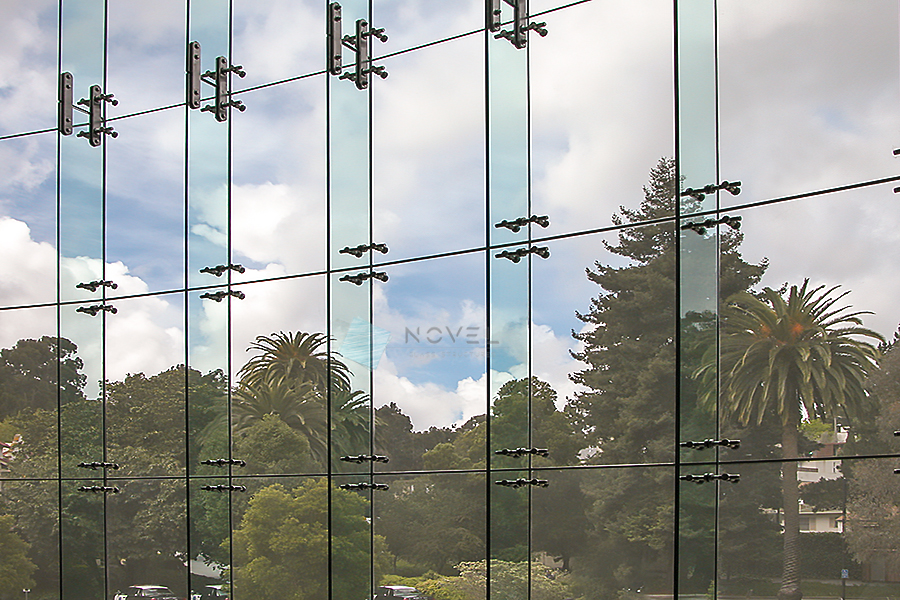
In this method, glass fins are used instead of pipes. One of the main features of the glass fin method in spider facades is the absence of a metal frame and the seamless appearance of the glass panels. The purpose of using this facade system is to make optimal use of natural light while creating an attractive architectural appearance.
In the construction details of this type of glass facade, the fins play an important role. In fact, the glass serves not only as the building facade but also as a structural element.
These fins vertically connect the glass panels to one another, and their connection to the glass is made at specific point connections.
The glass used in glass fin spider facades consists of two- or three-layer laminated tempered glass. Depending on the type of building structure, these glass panels can be installed in multiple sections.
It should be noted that the height of glass panels and columns is usually 6 meters. In structures exceeding 6 meters in height, point-supported structural elements are used at the connection between two glass panels to create a seamless appearance. This is determined by structural engineers and surveying engineers based on the loads applied to the glass before installation. In this type of spider facade, loads are primarily transferred vertically.
The supporting connections used in glass fin spider facades are mostly made of stainless steel. These include spider fittings, rotules, connectors, and fin clamps. These fittings must be properly insulated and waterproofed before being connected to the glass fins.
In a glass fin spider facade, the glass serves both as the supporting structure and as the glass facade itself. This type of facade is also referred to as a transparent fin glass facade.
Spider Facade with a Cable System
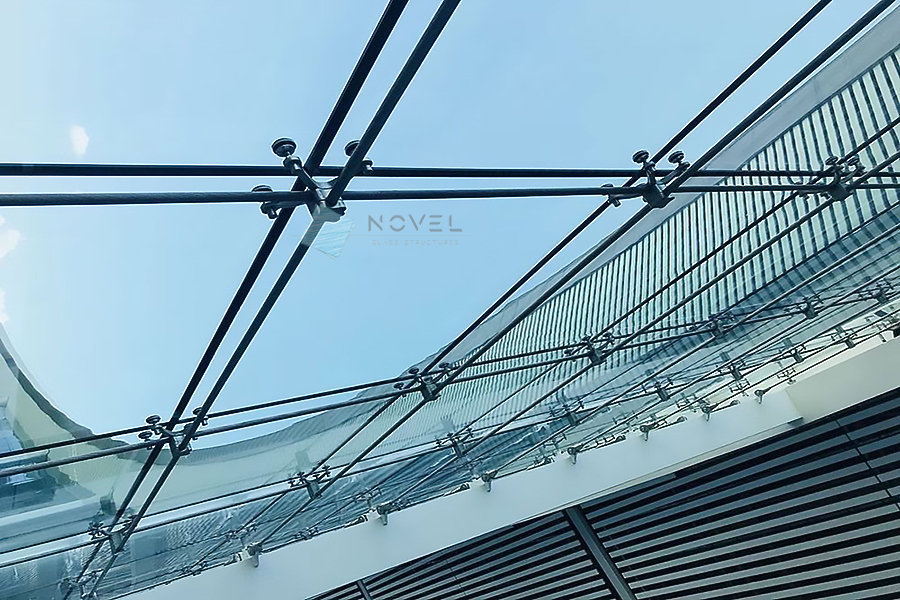
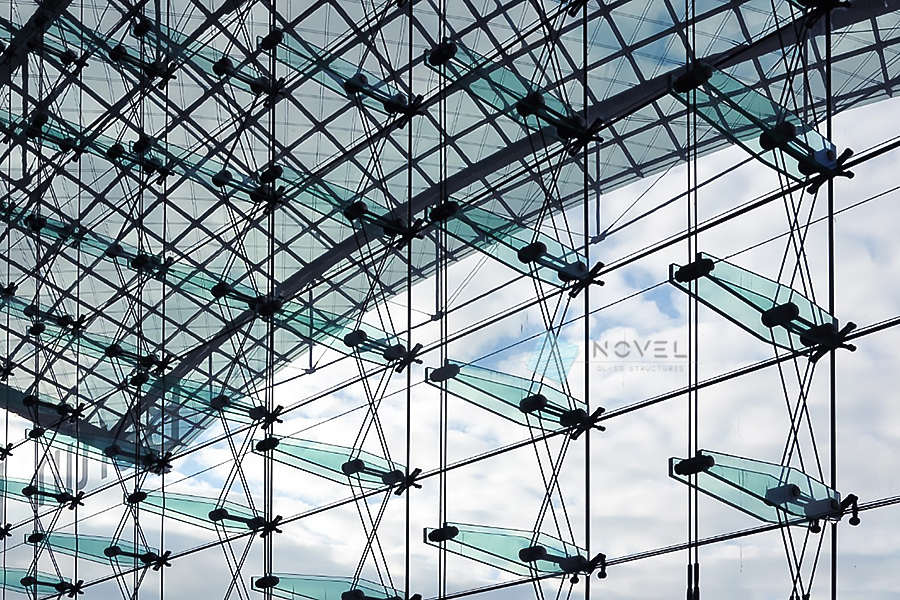
In this method, neither pipes nor glass fins are used. Instead, these structural elements are replaced with high-strength and highly durable cables. Strong stainless-steel clamps are installed at the intersections of the cables to keep them securely in place. The cables are tensioned using hydraulic jacks.
This spider facade method also offers a unique aesthetic appearance. Cable structures are arranged in the form of nets, crosses, or trusses to withstand the applied loads and transfer them to the main structure.
The structural calculations for this system are complex and require a very strong supporting substructure.
This method can be implemented in both flat and curved forms.
In this type of spider facade, tensioned cables serve as the supporting structure and provide high structural strength.
Cable spider facades have a highly attractive appearance because the supporting structure is no longer made of pipes or trusses. Instead, powerful cables serve as the primary supporting elements. In general, wire cables, wires, and tension-resistant materials are used in the supporting structures of cable facades.
Spider Facade with a Truss Structure
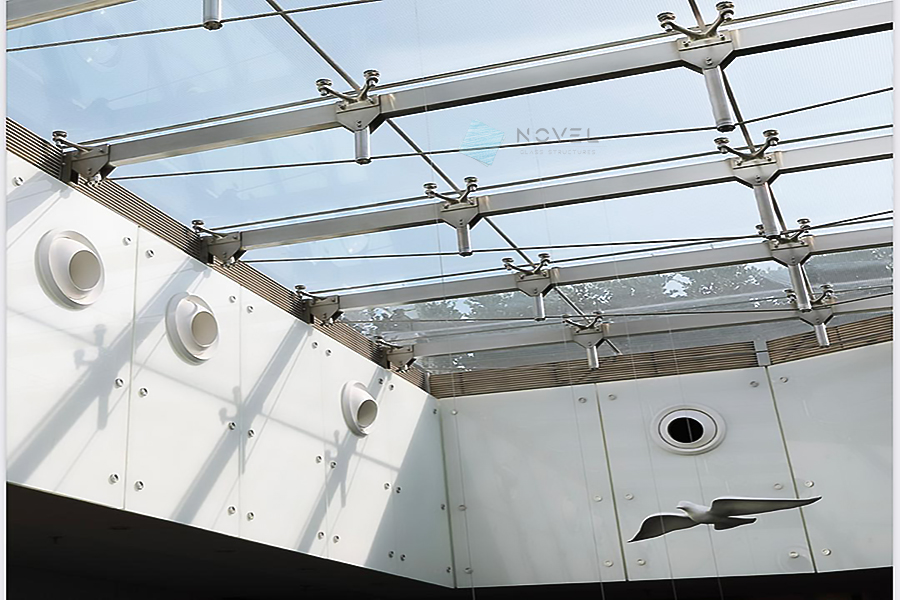
The steel truss spider facade is one of the widely used structural systems for glass facades. It should also be noted that this type of spider facade requires precise structural calculations and design.
The underlying structure of this type of facade can consist of square-shaped columns, advanced steel sections, or trusses. This method can be implemented as a vertical or standing facade.
Truss spider facades are generally made of steel structures. However, cable or pipe structures can also be incorporated into this type of facade. This combination can increase the structure’s resistance to applied forces such as wind, earthquakes, and natural factors. At the same time, the dead load can be reduced due to the reduced use of steel, while providing a wider field of view.
Advantages of Spider Glass Facades
Spider glass facades offer several advantages, which is why contractors and architectural engineers use this type of facade in various building projects. These advantages include:
- The connections and materials used in this facade are lightweight, resulting in a lower overall structural weight.
- Spider facades are relatively easy to install and provide a modern glass architectural style.
- Spider facades allow the interior of the building to benefit from maximum natural light.
- Reflective and UV-protection glass can be used to control the amount of natural light.
- This type of facade has a striking appearance while also providing high structural resistance.
- The movement of the glass panels and vibration of the hardware can increase the facade’s resistance to earthquakes.
- The use of large glass panels without restricting the view is another advantage of this facade system.
- The refined design of the structure and hardware used in this facade significantly enhances its aesthetic appeal.
- Spider facade glass provides a high level of sound and thermal insulation while also offering resistance to impact.
- The various systems available under the spider facade category provide considerable flexibility, which is one of the main reasons these facades are used in modern commercial and office buildings.
Disadvantages of Spider Facades
Spider facades also have certain limitations that restrict their use under specific conditions. Some of their disadvantages include:
- Compared with similar facade systems, this type of facade requires precise structural calculations and inspection by civil engineers.
- Installing openings in this type of facade can be somewhat difficult and requires specific construction details.
- The waterproofing of this type of facade requires continuous inspection throughout the installation process.
Components of a Spider Facade
- Tempered and laminated glass
- Metal or glass frames
- Stainless-steel structural connections and fittings
- Antibacterial silicone sealant
- Spider-shaped fittings
Reviews
There are no reviews yet.